Inner peace. The phrase is everywhere in Delhi's wellness culture — on retreats, in apps, on workshop banners, in the self-help sections of bookshops in South Extension. And yet genuine inner peace — not as a feeling to be manufactured, not as a performance of serenity, but as a real and sustainable quality of relationship with one's own inner life — remains elusive for the vast majority of people in the city. This article is about why. And about what the actual path to inner peace looks like for a person living in Delhi's reality.
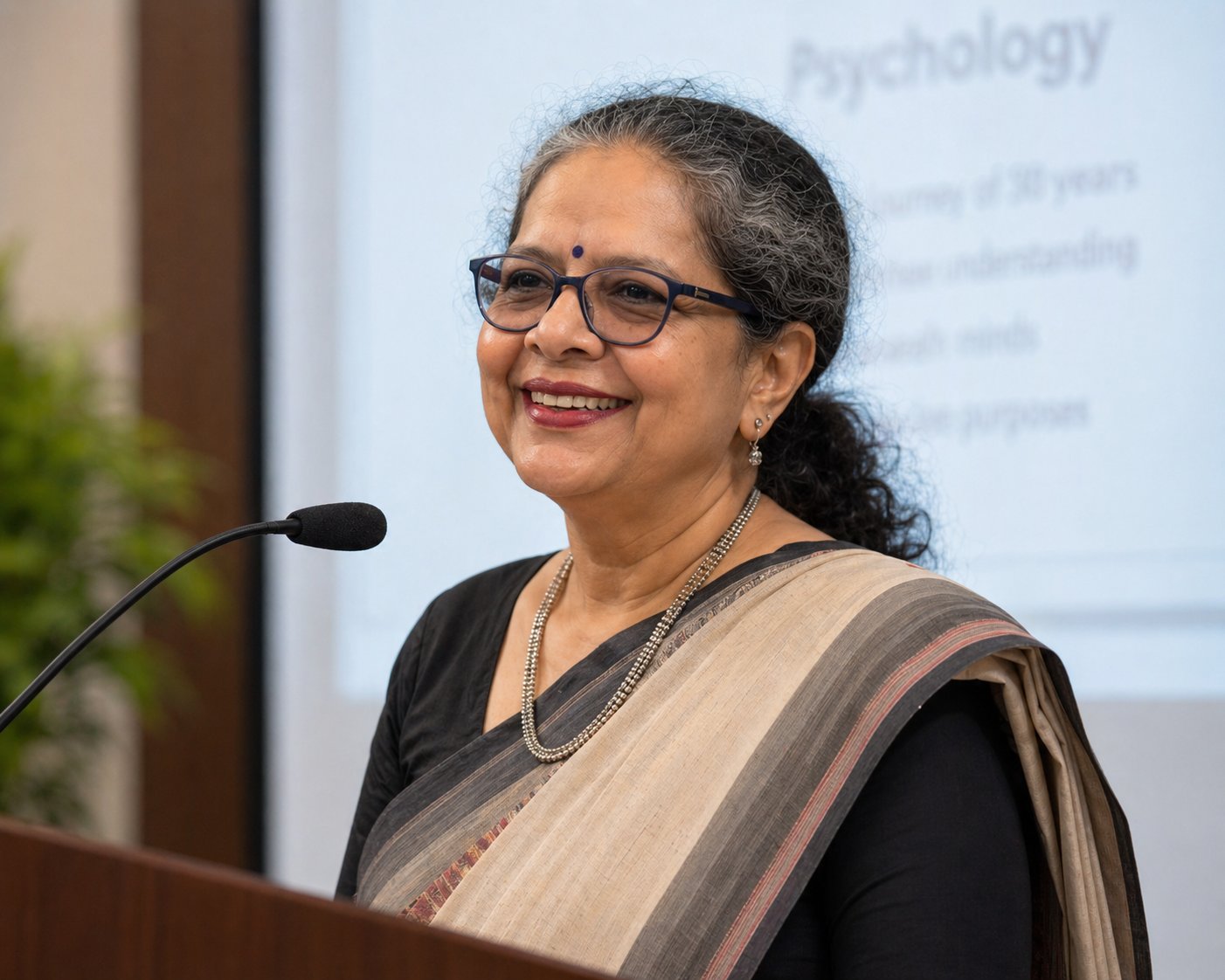
It is written by Anuradha Banerji Sarkar — a psychologist and hypnotherapist who has spent 35 years in South Delhi helping people find what she describes, simply and precisely, as the ability to be inside themselves without suffering.
What Inner Peace Actually Is — A Careful Definition
Inner peace is widely sought and rarely understood. The most common misconception is that it is an emotional state — a pleasant, calm feeling that, once achieved, persists as a permanent condition. This misconception produces a great deal of unnecessary suffering, because it generates the expectation of a flatness of experience — a permanent quietening of difficulty — that is neither realistic nor, when examined carefully, actually desirable.
Genuine inner peace is not an absence of difficulty. It is not emotional flatness. It is not the suppression of painful feelings, the bypassing of grief or fear, or the attainment of some elevated state from which ordinary human suffering is observed at a safe and painless distance. All of these approximations — which are prevalent in some wellness and spiritual communities — are forms of dissociation rather than peace, and they carry their own significant psychological costs.
Genuine inner peace is a quality of relationship with one's own experience — the capacity to meet what arises, including what is painful and difficult, without being overwhelmed or defined by it. It is the difference between being swept away by a river and being able to stand in it, feel its current against your body, and choose where to swim. It is not achieved by making the river calmer. It is achieved by developing a different, more stable, more grounded relationship with the river of one's own inner experience.
In psychological terms, inner peace is closely related to what researchers call affect regulation, psychological flexibility, and the quality that Buddhist traditions describe with the Pali word equanimity — a balanced, non-reactive awareness of experience that neither clings to what is pleasant nor pushes away what is painful. This quality is genuinely cultivable. But the path to it is not always the one that wellness culture suggests.
Why Delhi Makes Inner Peace Particularly Difficult
Delhi is not a city that makes inner peace easy. The physical environment is, by any objective measure, stressful: noise levels that routinely exceed safe exposure thresholds; air quality that is, for significant portions of the year, genuinely dangerous; traffic that is not merely inconvenient but actively aggression-inducing; and a sensory intensity that is unremitting. These are not metaphors. They are physiological stressors that produce measurable elevations in cortisol, adrenaline, and inflammatory markers — the biochemistry of chronic stress.
But the more significant obstacle to inner peace in Delhi is not the physical environment. It is what the city asks of its residents in terms of identity. Delhi is a performing city. It values achievement, visibility, and the management of social impression with an intensity that has few equivalents anywhere in India. To be in Delhi is to be in a state of constant implicit evaluation — of one's professional standing, one's social connections, one's family's status, one's address, one's children's school — in ways that make the simple experience of being enough, of resting in oneself without the urgency of becoming or impressing, genuinely difficult to access.
The cultural substrate of Delhi also carries particular historical weight. The Partition trauma, the legacy of colonial disruption, the specific social dynamics of a city that is also the capital of a nation in rapid and sometimes disorienting transformation — all of these produce ambient psychological conditions that shape the inner lives of Delhi residents in ways that are rarely acknowledged and almost never addressed directly.
The Psychological Path — What the Work Actually Involves
The path to genuine inner peace — the kind that is sustainable in the reality of Delhi life, not only in the protected environment of a meditation retreat — involves several distinct layers of psychological work.
The surface layer involves practical tools for managing stress and emotional arousal: the kind of skills that CBT and mindfulness-based approaches provide. These are valuable and produce genuine, immediate relief. The capacity to recognise anxious thoughts without being swept away by them; the ability to interrupt the physiological stress response before it escalates; the skill of returning to the present moment from the habitual wandering of the worry-prone mind — these are real tools that produce real improvement in daily life quality.
But sustainable peace requires going deeper. It requires attending to the beliefs that make peace feel impossible or undeserved. Many people carry, at a level below conscious awareness, beliefs that are fundamentally incompatible with peace. Beliefs like: "I am only valuable when I am achieving." "If I rest, I will fall behind and never recover." "I do not deserve to feel good when there is so much left to do." "Peace is for people who have already succeeded — I have not yet earned it." These beliefs — absorbed in childhood from parents, teachers, and the broader culture — are the internal version of Delhi's relentless demand for performance. They produce a quality of chronic inner restlessness that no amount of meditation or mindfulness can fully address without also attending to the beliefs themselves.
This is where hypnotherapy becomes particularly relevant. These deep beliefs were typically formed before the capacity for critical evaluation was developed — in early childhood, when the developing psyche was highly impressionable and when the messages it received were absorbed as truth rather than as one possible interpretation. They are maintained not primarily by conscious thought but by subconscious conditioning. Reaching and changing them requires a therapeutic approach that can access the subconscious level — which is precisely what hypnotherapy provides.
Inner Peace and Achievement — A False Opposition
One of the most pervasive and damaging myths in Delhi's professional culture is that inner peace and achievement are incompatible — that the anxiety, the drivenness, the relentless ambition that characterise successful careers in Delhi are the cost of success rather than a liability. The implicit belief is that relaxing the grip means slipping behind; that peace is a luxury that successful people cannot afford; that the anxiety-driven overworker is, for all their suffering, at least winning.
The evidence — both from psychological research and from Anuradha's 35 years of clinical observation — does not support this belief. The most sustainably productive people she works with are not the most anxious or the most driven. They are the ones who have found a way to work from a stable, grounded centre rather than from a state of chronic activation. Their work is better because they can think more clearly; their relationships are better because they have more capacity for genuine presence; their bodies are healthier because they are not sustained by cortisol and adrenaline.
Inner peace does not reduce ambition. It transforms it — from the fearful, compulsive, other-directed striving that burns people out, into a grounded, values-led engagement with work that is far more effective and far less costly. The person who works from peace is doing better work and living better at the same time.
What Inner Peace Actually Requires — A Direct Account
Inner peace, in Anuradha's clinical experience, requires several things that wellness culture is sometimes reluctant to say directly.
It requires honest confrontation with the beliefs and patterns that are preventing it — not just observation of them, but specific therapeutic work to change them at their root. This is not a one-time experience and it is not always comfortable. The process of genuinely encountering one's own conditioning — the beliefs, the defences, the early wounds that have shaped the entire structure of one's inner life — is challenging. It is also the only path through.
It requires the willingness to feel what has not been felt — the grief, the anger, the fear, the longing that have been managed and suppressed and rationalised rather than genuinely processed. Inner peace on the other side of processed grief is real and stable. Inner peace that sits on top of unprocessed grief is fragile and temporary.
And it requires sustained, gentle, skilled support — the kind that a good therapeutic relationship provides. Not because healing cannot happen alone, but because the patterns that prevent peace were typically formed in relationship — in the presence of specific people, specific dynamics, specific experiences of being seen or not seen — and are most effectively worked with in the context of a skilled, caring, non-judgemental therapeutic relationship.
How to Begin — Practically
The path to inner peace begins with a single honest conversation — with a therapist, or simply with yourself — about what is actually happening in your inner life. Not what should be happening. Not what the polished presentation of your life suggests is happening. What is actually happening, in the quiet of your own experience, when no one is watching and nothing is required of you.
If that conversation reveals something you do not know how to address alone, Anuradha's South Delhi practice is a space for exactly this kind of engagement — without judgement, without agenda, without the demand that you be anything other than exactly where you are. From that starting point, the work is possible. And the peace — not as a permanent destination but as an increasingly reliable quality of inner life — is real. Sessions are ₹2,000 per 60 minutes. In-person and online. Hindi, English, and Bengali. Use the contact buttons on this page to begin.
Specific Practices That Support Inner Peace in Delhi
While psychological therapy is the most reliable path to the deeper inner peace this article describes, certain specific practices support the process and are regularly recommended to Anuradha's South Delhi clients. None substitutes for the therapeutic work — each reinforces and extends it.
A daily five-minute self-check-in practice: simply asking, at the beginning and end of each day, how am I actually — not how should I be, not how I need to be for the day ahead, but how am I in this moment, in my actual experience? This practice builds the habit of inner attention that is the foundation of genuine inner peace, and it develops the capacity to notice early when something needs attention before it reaches crisis level. Protected non-productive time: time that is genuinely free from the obligation to be useful, productive, or improving — time in which it is completely acceptable to rest, be still, or do something purely for pleasure. In Delhi's achievement culture this is often the most psychologically revolutionary change a person can make, and frequently produces the most rapid improvement in baseline wellbeing. And physical movement that is genuinely pleasurable rather than disciplinary — movement the body enjoys, that produces aliveness and embodied pleasure rather than the performance of fitness.
Inner Peace as an Ongoing Practice, Not a Destination
The final and perhaps most important thing to say about inner peace is that it is not a destination but an ongoing practice. It is not a state to be achieved and then maintained effortlessly. It is a quality of relationship with one's own inner life that requires — like any significant relationship — ongoing attention, care, and the willingness to keep showing up honestly. There will be periods when peace feels more accessible and periods when it feels remote. There will be losses, stresses, challenges, and genuine difficulties that disturb the inner equilibrium even of the most psychologically grounded person. What inner peace actually offers is not immunity from these disturbances but a different relationship with them: the capacity to be in the disturbance without being defined or destroyed by it.
If this kind of inner peace — quiet, practical, sustainable in the reality of Delhi life — is what you are looking for, Anuradha's South Delhi practice is a space to begin the work. Sessions are Rs.2,000 per 60 minutes. In-person and online. Hindi, English, and Bengali. Use the contact buttons on this page. Response within 24 hours.
The Therapeutic Work — What Inner Peace Actually Requires
Genuine inner peace — the sustainable kind that does not depend on the removal of external difficulty — requires several things that wellness culture is sometimes reluctant to say directly. It requires honest confrontation with the beliefs and patterns that are preventing it — not just observation of them, but specific therapeutic work to change them at their root. This is not always comfortable. The process of genuinely encountering one's own conditioning — the beliefs, the defences, the early wounds that have shaped the entire structure of one's inner life — is challenging. It is also the only reliable path through.
It requires the willingness to feel what has not been felt — the grief, the anger, the fear, the longing that have been managed, suppressed, and rationalised rather than genuinely processed. Inner peace on the other side of genuinely processed grief and anger is real and stable. Inner peace that sits on top of unprocessed emotion is fragile and temporary — disrupted by any event that reminds the system of what has been suppressed. And it requires sustained, skilled, compassionate support — the kind that a good therapeutic relationship provides. Not because healing cannot happen alone, but because the patterns that prevent peace were typically formed in relationship and are most effectively worked with in relationship. Anuradha's South Delhi practice offers exactly this: a space of genuine, skilled, culturally informed therapeutic attention, available in-person and online, at Rs.2,000 per 60-minute session, with responses to enquiries within 24 hours.
Beginning Now — A Simple Invitation
If reading this article has produced a sense of recognition — the feeling that what is being described here is what you are actually looking for, even if you have not previously had words for it — Anuradha's invitation is direct and simple: reach out. Use the contact buttons on this page. A brief initial message is all that is needed to begin. She responds within 24 hours. The first session — Rs.2,000, sixty minutes, in-person in South Delhi or online from wherever you are — is a conversation, not a commitment. It is an opportunity to be genuinely heard in your actual situation, without the performance that most social contexts require. From that beginning, everything else is possible. The path to inner peace in the reality of Delhi life is not a straight line, and it is not always comfortable. But it is real, and it is available to you, and it begins with a single step. Use the contact buttons on this page.