Grief is universal. But the experience of grief — and the degree to which a person in that grief is supported, seen, and given space — varies enormously by culture, family, and the particular circumstances of the loss. In South Delhi, Anuradha Banerji Sarkar has spent 35 years sitting with people in their grief. The patterns she has observed, the quality of suffering she has witnessed, and the therapeutic approaches she has found most effective form the basis of this comprehensive guide to grief and bereavement support in Delhi.
Whether you are in the raw immediacy of recent loss or carrying grief that has never been properly processed, this article is for you.
Grief in Delhi's Cultural Context — A Careful Assessment
Indian culture — particularly in Delhi's dominant Hindu, Punjabi, and North Indian communities — has a rich tradition of mourning ritual. The formalities of death and bereavement are well-developed: the cremation, the mourning period, the community gathering, the religious observances. These rituals serve a genuine psychological function — they mark the loss, bring the community together, and create a container for the expression of grief that might otherwise feel overwhelming and formless.
But the ritual container has limits. It is time-bounded: the period of formal mourning is defined and finite. And the cultural expectation that follows the mourning period — that the bereaved person should now "move on," "be strong for the family," "not dwell on it" — is psychologically misaligned with the reality of how grief actually moves through the human psyche. Grief does not respect cultural timelines. The loss of a spouse, a parent, a child, or a close friend typically takes two to four years to genuinely integrate, and often considerably longer. The expectation that this should be accomplished in weeks produces a particularly painful secondary suffering: the bereaved person's experience of their own grief as abnormal, excessive, or self-indulgent.
The consequence is that many people in South Delhi are carrying grief that has never been properly honoured. It shows up as depression, as anxiety, as a quality of flatness or meaninglessness that has persisted for years. It shows up as anger — the most underacknowledged dimension of grief, and the one most likely to disrupt relationships and careers. It shows up as physical symptoms: the body carrying what the mind has not been permitted to process.
The Many Forms of Loss That Produce Grief
When we speak of grief, the immediate association is with bereavement — the death of someone we love. And bereavement is indeed one of the most common presenting concerns in Anuradha's practice. But grief is not limited to death. It is the natural psychological response to any significant loss, and the losses that produce grief are more varied than is often acknowledged.
Bereavement — the death of a spouse, parent, sibling, child, or close friend — remains the most common form of grief and the one most likely to produce clinically significant suffering. The loss of a parent carries its own particular quality: the experience of suddenly being the older generation, the loss of the primary relationship through which one has always known oneself to be someone's child. The loss of a spouse produces a kind of grief that reorganises daily life completely, removing not just the person but the hundreds of shared routines and understandings that constituted ordinary existence. The loss of a child — regardless of the age of the child or the circumstances of the death — is among the most devastating experiences a human being can undergo, and the grief it produces is typically the most prolonged and the most resistant to cultural expectations of recovery.
Pregnancy loss and infertility grief are forms of bereavement that carry particular invisibility in Delhi's cultural context. The loss of a baby through miscarriage, stillbirth, or termination — and the grief of infertility that may never resolve in a child — are rarely given the same recognition as other forms of loss, and the suffering they cause is correspondingly compounded by isolation.
Relationship loss — the end of a marriage, a long-term partnership, or a friendship of many years — produces genuine grief, including grief for the shared life, the shared identity, and the version of oneself that existed within that relationship. In Delhi's social context, where relationship endings carry social stigma alongside personal pain, this grief is often processed in isolation.
Loss of health — one's own or a loved one's — produces grief for the life that was possible before the illness, grief for the plans and aspirations that must be revised, grief for the body that was known and trusted and no longer is.
Migration and displacement carry a form of grief for Delhi clients who have relocated from other parts of India — from Kolkata, from the South, from smaller cities — grief for the community, the landscape, the language, the version of the self that belonged to that place.
When Grief Becomes Complicated — Recognising the Signs
Most grief — even very intense grief — follows a natural progression through which the acute pain gradually integrates into the ongoing fabric of life. This is not a linear process and does not look the same for any two people. But when the natural process is blocked — when grief remains at crisis intensity well beyond the typically expected period, or when it produces sustained impairment in daily functioning — we speak of complicated grief, now formally recognised in psychiatric classification as Prolonged Grief Disorder.
The signs of complicated grief include: grief that remains at the same acute intensity after one to two years as it was immediately after the loss; an inability to think about or speak about the deceased without the same level of distress as in the immediate aftermath; a complete withdrawal from social relationships and activities that were previously valued; persistent preoccupation with the circumstances of the death, particularly in cases of sudden, traumatic, or violent loss; difficulty accepting the reality of the loss — behaviour that suggests the person is still waiting for the deceased to return; and, most urgently, recurring thoughts of wanting to be with the deceased, which may indicate suicidal ideation and always requires immediate professional attention.
Complicated grief responds very poorly to the conventional social prescription of time and distraction. It requires specific, skilled therapeutic intervention — and the earlier that intervention begins, the better the outcomes.
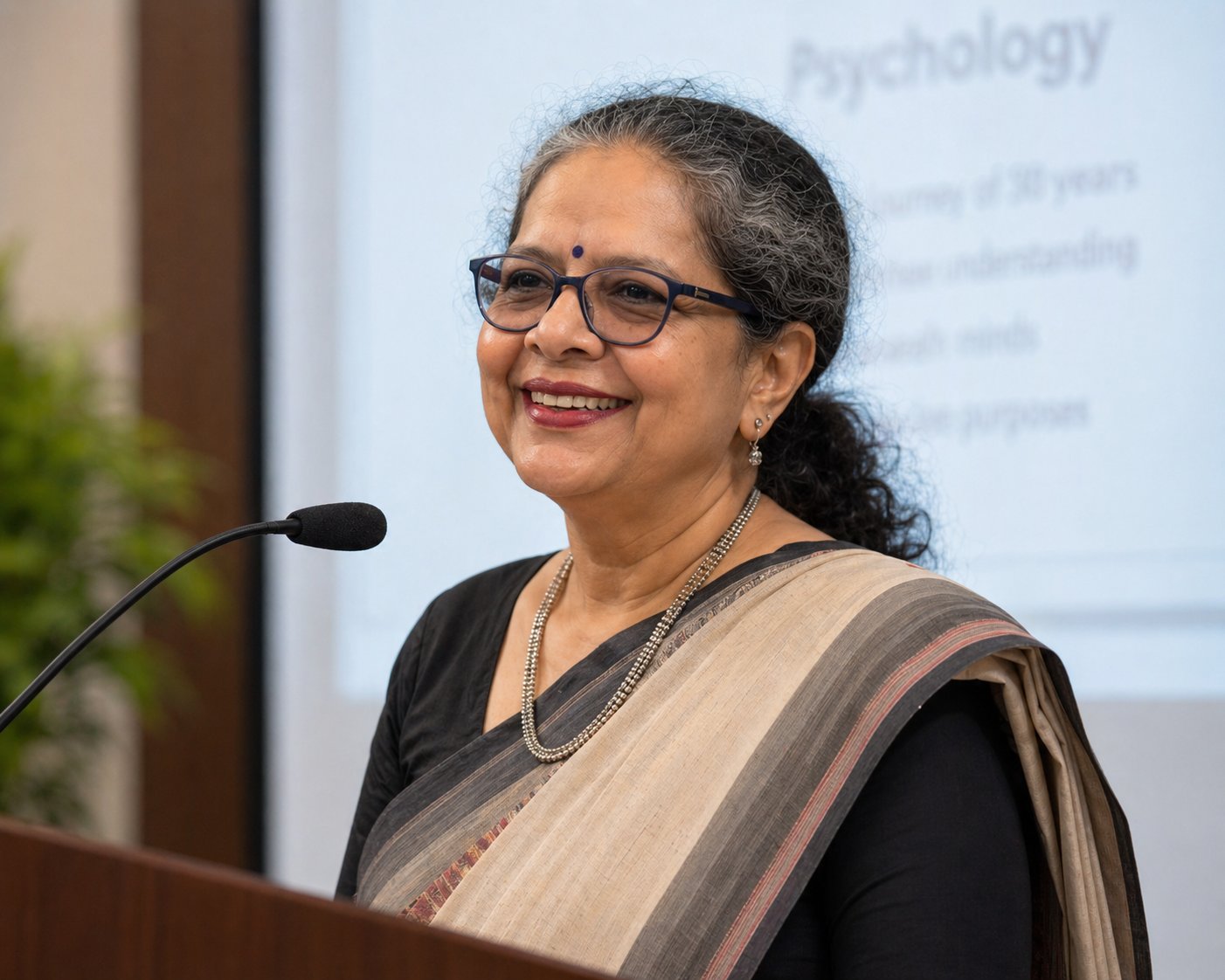
How Therapy Helps with Grief — What the Process Looks Like
Grief counselling at Anuradha's South Delhi practice begins from a foundational therapeutic stance: grief is not a problem to be solved, a symptom to be treated, or an emotion to be moved through as quickly as possible. It is a natural, healthy response to loss — and the therapeutic task is to create the conditions in which that response can be fully expressed, witnessed, and gradually integrated at the client's own pace.
The early sessions of grief work often involve relatively little that looks like conventional therapy. Anuradha listens. She asks questions that invite the bereaved person to speak about the person they have lost — who they were, what the relationship was, what daily life looked like with them in it, what the world looks like without them. For many grieving people in Delhi, this is the first sustained opportunity they have had to do this, because the cultural pressure to "be strong" and "not upset others" has meant that the grief has been processed in isolation, privately, in the small hours of the morning when no one is watching.
The experience of being witnessed in grief — of having another human being sit with the full weight of what has been lost, without needing it to be different or smaller or resolved — is itself deeply therapeutic. Many clients report that they feel something shift in the first or second session simply through this quality of witnessed grief, even before any specific therapeutic technique has been applied.
In subsequent sessions, the therapeutic work may involve: facilitating the expression of grief dimensions that have been suppressed (particularly anger, which is often the most taboo dimension in Indian cultural contexts); working with guilt — the "what ifs" and "if onlys" that torment many bereaved people; helping the client begin to construct a new relationship with the deceased — one that acknowledges the reality of the physical absence while preserving the continuing significance of the person in the client's inner life; and gradually, when the client is ready, beginning to re-engage with the parts of life that were abandoned in the depths of grief.
Past Life Regression and Grief — An Unexpected Dimension
For some grieving clients — particularly those with a spiritual or metaphysical orientation, or those whose conventional bereavement support has reached its limits — past life regression offers an unexpected dimension of healing. The exploration of the soul's continuity, the encounter with a sense of the deceased person's ongoing presence in another form, and the deepened understanding of the soul-level relationship between the bereaved and the person they have lost — these experiences, when they arise in the therapeutic context of PLR, can produce a quality of peace and resolution that nothing else has achieved.
Anuradha approaches PLR in the context of grief with particular sensitivity and care. This work is offered only when it feels appropriate to the client's own orientation and readiness, and never as a substitute for the earlier stages of grief counselling that allow the more immediate and primary dimensions of loss to be processed first.
Seeking Grief Support in South Delhi
If you are carrying grief — whether recent or long-held, whether from bereavement or from another form of loss — reaching out for professional support is an act of self-respect, not weakness. You do not need to have reached a crisis point. You do not need to have waited until you feel "bad enough" to deserve help. The grief you are carrying is sufficient reason to reach out, at whatever stage it is, in whatever form it takes. Anuradha's South Delhi practice is available in-person and online. Sessions are ₹2,000 per 60 minutes. Hindi, English, and Bengali sessions are available.
Grief in the Indian Cultural Context — Strengths and Constraints
Indian mourning traditions carry genuine psychological wisdom that modern secular therapeutic culture sometimes underestimates. The mourning rituals, the community gathering, the religious observances — these provide structure, meaning, and social support in the immediate aftermath of loss in ways that Western psychological traditions have increasingly come to recognise as therapeutically valuable. The sense of being held by community, of having the loss marked in formal and meaningful ways, of religious frameworks that provide an account of what death means and what follows it — these are genuine resources, and the families of Saket, Greater Kailash, and Defence Colony who retain connection to these traditions are, in Anuradha's clinical experience, often somewhat more well-resourced for the initial phase of acute grief than those who have lost this connection.
But Indian mourning traditions also have constraints that psychological understanding must honestly acknowledge. The time-bounded nature of the formal mourning period — typically thirteen days in Hindu tradition — can create a cultural expectation that acute grief should be resolved or at least significantly diminished within this period. This expectation, when internalised by the bereaved person, produces a particularly cruel secondary suffering: the experience of their own grief as abnormal, excessive, self-indulgent, or socially unacceptable when it persists beyond the culturally sanctioned duration. Anuradha consistently tells grieving clients in South Delhi the same thing: grief does not have a cultural timeline. It has its own process, which unfolds according to its own internal necessity, and which cannot be meaningfully hurried by cultural expectation.
Complicated Grief — When to Seek Professional Support
Most grief — even very intense grief — follows a natural progression through which the acute pain gradually integrates into the ongoing fabric of life. This is not linear and does not look the same for any two people. But when the natural process is blocked — when grief remains at crisis intensity beyond eighteen months to two years, or when it produces sustained impairment in daily functioning, relationships, or physical health — we speak of complicated grief, now formally recognised in clinical classifications as Prolonged Grief Disorder. Complicated grief responds very poorly to the conventional social prescription of time and distraction. It requires specific therapeutic intervention — and the earlier that intervention begins, the better the outcomes.
Signs that professional support is warranted include: grief that remains at the same acute intensity after twelve to eighteen months as in the immediate aftermath; inability to think about or speak about the deceased without the same level of distress as initially; persistent preoccupation with the circumstances of the death, particularly in cases of sudden, traumatic, or violent loss; and — most urgently — any statement suggesting the bereaved person wishes to join the deceased. These presentations require immediate professional attention, and Anuradha is available both in-person in South Delhi and online for clients across Delhi NCR and India. Rs.2,000 per session. Response within 24 hours via the contact buttons on this page.
PLR and Grief — When Conventional Support Reaches Its Limits
For some grieving clients in South Delhi — particularly those with a spiritual or philosophical orientation, or those whose conventional bereavement support has genuinely reached its limits — past life regression offers an unexpected dimension of healing. The exploration of the soul's continuity, the encounter with a sense of the deceased person's ongoing presence in another form, and the deepened understanding of the soul-level relationship between the bereaved and the person they have lost — these experiences, when they arise in the therapeutic context of PLR, can produce a quality of peace and resolution that nothing else has achieved.
Anuradha approaches PLR in the context of grief with particular sensitivity and care. It is never offered as a first-line bereavement intervention, and never as a substitute for the earlier stages of grief counselling that allow the primary dimensions of loss to be processed first. It is offered when the foundation of conventional grief support has been laid, when the client's own orientation makes this kind of exploration meaningful rather than confusing or destabilising, and when the specific quality of the grief — its inexplicable depth, its resistance to resolution, its sense of reaching further back than this lifetime allows — suggests that working at this deeper level may be clinically productive.
Practical Support for Grief in South Delhi
If you are carrying grief — whether recent or long-held, from bereavement or from any other form of significant loss — reaching out for professional support is an act of self-respect and of genuine care for the people in your life. Unprocessed grief does not disappear. It changes form: into depression, into physical symptoms, into emotional unavailability, into an undercurrent of sadness that colours everything without ever being clearly named. The work of grief counselling is the work of allowing it to be what it is — grief — so that it can move through, integrate, and eventually leave the essential quality of the person intact while carrying the loss with dignity and love. Sessions are Rs.2,000 per 60 minutes. In-person in South Delhi and online. Hindi, English, and Bengali. Response within 24 hours.