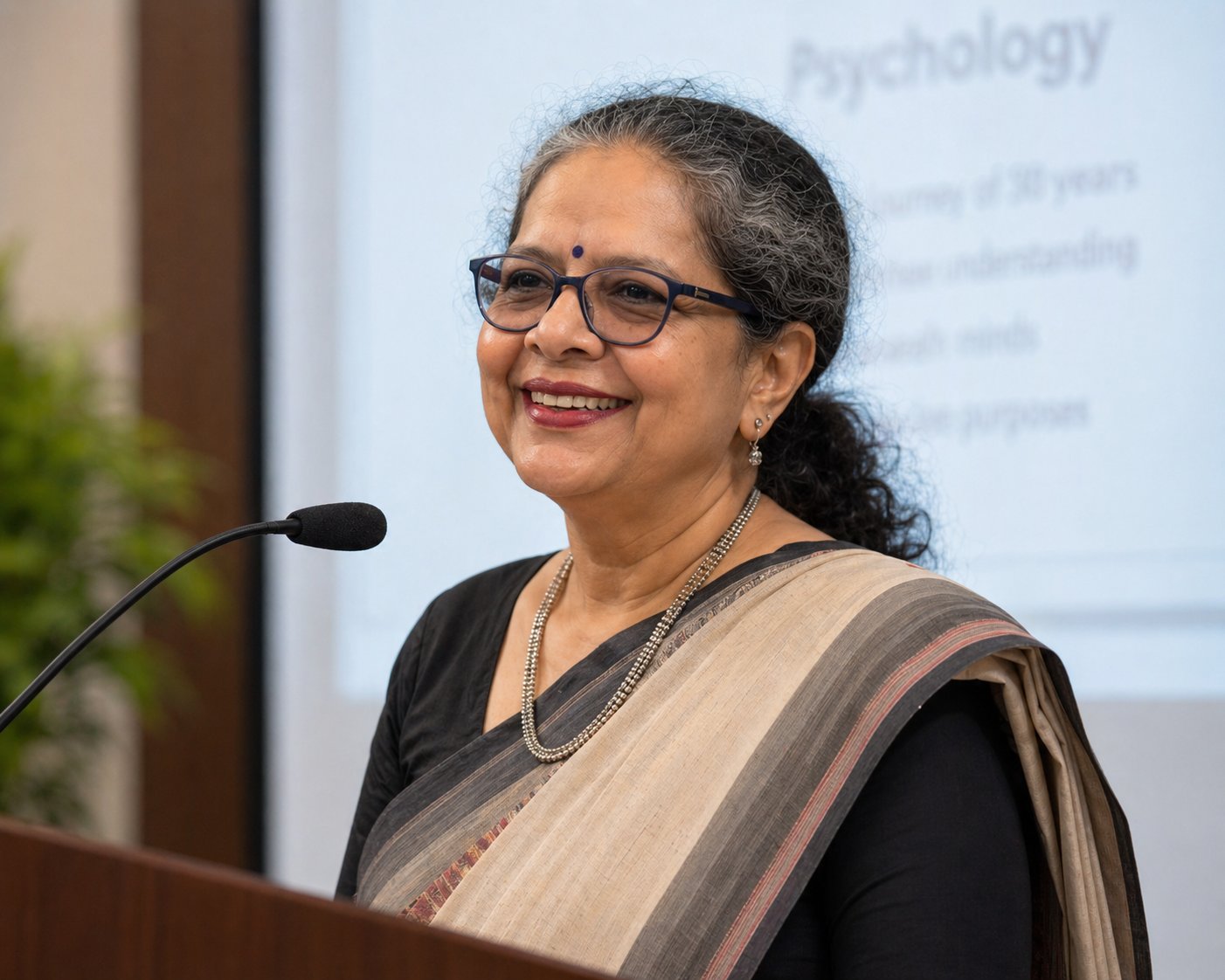
Anuradha Banerji Sarkar35+ Years Experience₹2,000 per sessionIn-Person & Online
35+
Years Experience
₹2,000
Per Session · In-Person & Online
Mon–Sat
10 AM – 7 PM · Sunday by Appt
Addiction is not a character flaw or a failure of willpower. It is a psychological pattern — one with roots in emotional need, learned behaviour, and often early experience — that has become self-reinforcing and difficult to break from the outside in. At her South Delhi practice, Anuradha Banerji Sarkar has helped hundreds of individuals break free from addictive patterns using an integrative combination of hypnotherapy, CBT, and compassionate counselling.
What Is 🌱 Addiction Relief Therapy?
Addiction relief therapy in Anuradha's practice addresses the psychological, emotional, and subconscious roots of addictive behaviour — not just the behaviour itself. Using hypnotherapy to access and work with the subconscious drivers of the pattern, CBT to build conscious strategies and insight, and counselling to address the emotional needs the addiction may be serving, the approach is comprehensive and individually tailored.
Who Can Benefit?
This service is available at Anuradha's South Delhi practice and online. It is appropriate for:
Smoking and tobacco addiction — one of Anuradha's specialisms
Alcohol dependency and problem drinking
Behavioural addictions: gambling, social media, screens, pornography
Food addiction and emotional eating
Substance use (cannabis, recreational drugs) — psychological support alongside any medical care
Nail-biting, hair-pulling, and other body-focused repetitive behaviours
Any habit that feels impossible to stop despite genuine motivation to change
What Does a Session Look Like?
An addiction relief session at Anuradha's South Delhi practice lasts 60 minutes. After a thorough assessment of the addiction's history, triggers, and emotional function, Anuradha develops a personalised treatment plan. Sessions typically combine hypnotherapeutic work (accessing the subconscious drivers of the pattern) with practical CBT strategies (managing triggers and cravings) and supportive counselling (addressing the emotional needs the addiction serves).
How Many Sessions Will I Need?
For smoking cessation, 4–8 sessions typically produces full, lasting cessation. For alcohol and behavioural addictions, 8–16 sessions allows for comprehensive, sustainable change. Anuradha will give you a realistic, honest estimate after your initial assessment.
📍 Areas Served — South Delhi, Delhi NCR & Online
Saket
Greater Kailash
Hauz Khas
Defence Colony
Lajpat Nagar
Malviya Nagar
Vasant Vihar
Green Park
South Extension
Noida
Gurgaon
Faridabad
Online sessions available for clients across Delhi NCR, pan-India, and internationally. All sessions in English, Hindi, and Bengali.
📅 Book a Addiction Relief Therapy Session
Ready to begin? Reach out to Anuradha directly.
South Delhi (in-person) · Online for NCR, India & International · ₹2,000 per session · Hindi, English & Bengali
Yes — hypnotherapy is one of the most effective approaches for smoking cessation. It works by reprogramming the subconscious triggers, habits, and emotional associations that drive smoking. Many of Anuradha's Delhi clients have achieved permanent cessation after 4–8 sessions.
Yes. All sessions are available online via secure video call for clients across Delhi NCR — Noida, Gurgaon, Faridabad, Ghaziabad — and pan-India and internationally. Online sessions are fully effective for addiction relief work.
No — Anuradha's addiction relief work is outpatient and private. Sessions take place at her South Delhi practice or online. For severe physical addiction (particularly alcohol or opioids), she may recommend you also consult a medical doctor or psychiatrist, but the psychological therapy with Anuradha can proceed alongside any medical care.
₹2,000 per 60-minute session. For smoking cessation (4–8 sessions): ₹8,000–16,000. For broader addiction work (8–16 sessions): ₹16,000–32,000. These are private fees with no hidden costs.
Yes. Anuradha also works with family members affected by a loved one's addiction — helping them navigate the emotional complexity, set healthy boundaries, and support recovery in constructive rather than enabling ways.
✦ Related Services & Reading
Hypnotherapy · Delhi
Clinical Hypnotherapy in South Delhi
The primary tool for reaching subconscious addiction patterns — safe, effective, and deeply transformative.